Kerry Cattle
Kerry Cattle: An Ancient Irish Dairy Breed
The kerry cow is an ancient Irish dairy breed with a history that extends to Neolithic times in Ireland, 6000 years ago. It is a small, fine boned dairy animal, hardy and long lived, an easy calver and devoted mother.
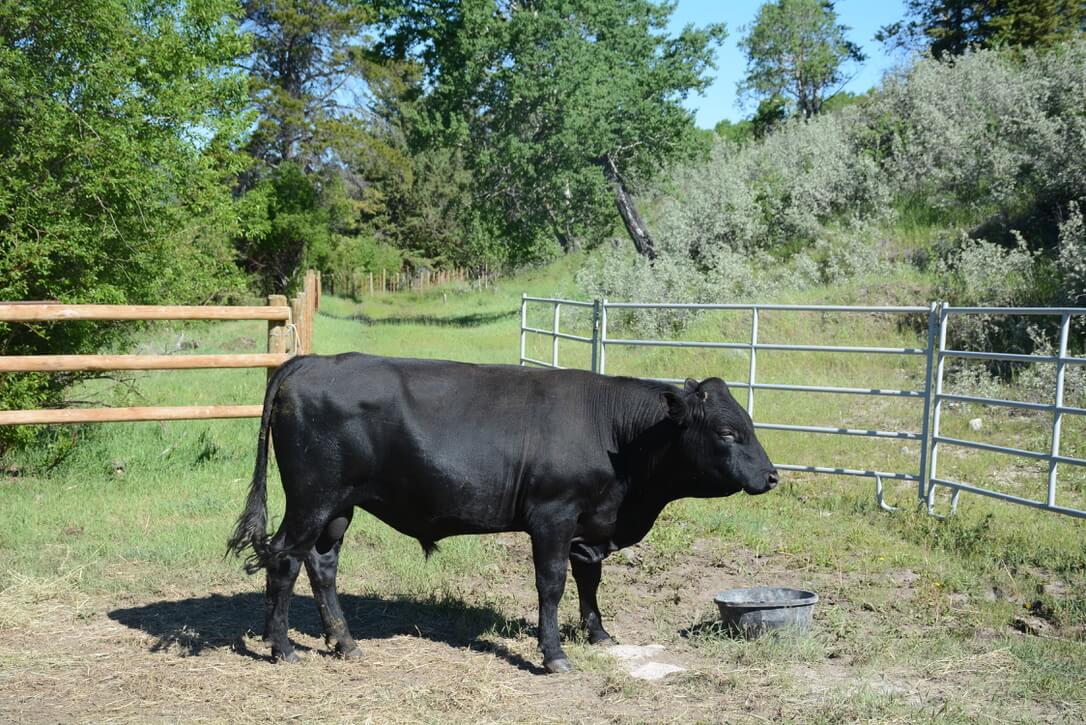
Usually black, although a red animal does appear occasionally, it can have white on the udder and belly and if not removed has short pointed black tipped white horns. They are alert and light on their feet, the configuration of their hooves and their agility allows them to manage wet and rough ground with ease.
Milk, cheese and cereals along with some vegetables seems to have formed the greater part of the Irish diet until the introduction of the potato in the late sixteenth century. The wet climate and long growing season in Ireland helped in the development of the kerry breed as a primarily grass fed breed. The breed was named for the far South Western county of Kerry in Ireland where the rough ground, heavy rain and poor soil were inappropriate for large more demanding imported cattle breeds.
The milk became famous for grass fed butter and cheese, and became an ideal animal for smallholders who would make butter for sale to supplement household income. The earliest evidence of dairy farming in Ireland has been found in ancient Neolithic pottery containing traces of dairy fats. As there was no refrigeration bogs were often used to store the pots of butter – and some pots of ancient “bog butter” continue to be found over the years.
The kerry cow is legendary in Ireland, even today, and songs and poems to the breed are familiar to many Irish people.
Our Experience with Kerry Cows
We’d been raising highland cattle for years and thought we knew cows. We like hardy long lived cows that calve easily and are devoted mothers, like our highlands.
As one of the rarest cattle breeds in the world we were challenged to make a success with the few kerry cows in Canada and attempt to assist in the revival the breed. Working with Heritage Breeds Canada and the American Kerry Cow Association Inc we collected pedigree Kerry cows from Ontario, Alberta and Saskatchewan and eventually imported a young bull with a terrific unrelated pedigree and wonderful temperament from Massachusetts.
Several of the cows arrived bred but the first year we only had bull calves. We kept the bull calf from the cow with the best udder and temperament intact, the rest we made into steers and butchered them at 33 months. The beef is tender and flavourful although calves are slow growing they mature into a handsome beef animal.
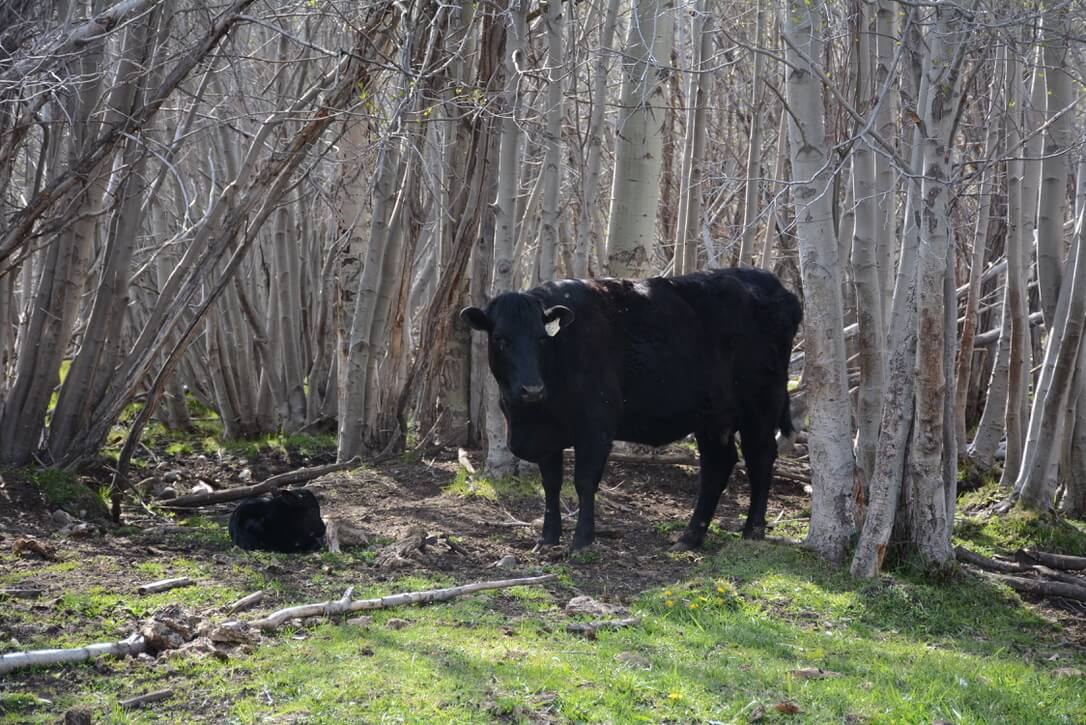
The temperament of the Kerry cow is mentioned in many of the poems and songs of Ireland. They are alert, yes, and protective of their calves. They are quick to look after themselves if no human is available. They are louder than highlands who are generally a very quiet breed. They are dominant in a field of highlands and do eat more than the highland, especially when lactating.
We have found that they are very sensitive and will become devoted to their human family if handled gently and thoughtfully from birth. Kerry cows who don’t trust humans can be fierce and difficult to manage. Some of our first Kerry cows were so ferocious we culled them after they had delivered a heifer calf to maintain the genetics. A reminder that not every rare breed individual animal is appropriate to keep. Culling can be as important as thoughtful breeding. Fortunately the ferocity does not seem to be inherited but a function of handling.
Breeding Practices and Temperament
As with our highlands we do not breed a kerry heifer until she is over 20 months old. This allows her to reach almost mature size and mature temperament, holding her own in the herd and being a more confidant mother. Calving is easy and a well cared for cow will produce calves for 15 years.
Interestingly we find these cows prefer to be called than herded from behind and have no love of herding dogs. This may be part of their protective nature or their independent minds.
We now have a herd of a dozen pedigreed breeding kerry cows, of a temperament that allows us to walk in a pasture unthreatened, even from cows with new calves at heel. We can vaccinate and treat cows and bulls in a pen without issue. We have several bulls to select from for breeding, and a number of straws of semen from an unrelated bull for variety. Interestingly the bulls are consistently docile although they do enjoy a good session of bellowing and digging holes in fine sand or soil of their pasture.
This is challenging project but living in a part of the world with many predators, rough ground and a wild climate of heat, cold and wind, their hardy nature, thick winter coat and fierce maternal nature are strengths in our world, most of the time.
We are focused on producing healthy heifer calves who are handled gently after weaning and learn to trust their humans. We DNA calves to ensure their genotype is on file with their pedigree at the Canadian Livestock Records Corporation. We also genetically test each animal through UC Davis to confirm the nature of their milk’s casein, A2/A2 being the desired result.
A Word on Casein
Cow’s milk is about 87% water the rest is a combination of lactose, fat, protein and minerals. These make up the solids in milk. A major component of the protein is called casein – A1 and A2 milk refer to two different types of beta-casein proteins found in cow’s milk. Regular milk contains both A1 and A2 beta-casein, but A2 /A2 milk contains only A2 beta-casein.
Some studies suggest A1 milk may cause digestive discomfort, while A2 milk contains only A2 beta-casein, which is believed to be easier to digest for some people. Some believe A2/A2 milk is better for gut health while the smaller fat globules produce better butter and cheese. Research is ongoing, passionate advocates can be found on either side of the issue.
The only way to know what casein a cow produces – or the genes a bull carries for this milk – can be found through genetic testing. Kerry cattle often produce A2/A2 and we believe it is worth testing and selecting for this attribute.
Kerry vs. Dexter
The difference between the dexter and the kerry breed is another source of passionate argument. People will often say that our kerry cows look like dexter cows. It is generally agreed that the two breeds have some connection in their history.
Kerry cows are longer legged and have more of a dairy appearance. They are primarily a dairy breed while dexters are shorted legged and known as a dual purpose breed – for milk and beef. It appears that although the two breeds share a common background in Ireland the Dexter benefitted from the addition of other British breeds to make is more beefy and smaller. You can argue this amongst yourselves.
Kerry Cows For Sale
We breed our kerry cows to calve in the spring, and wean after six months. Although a little controversial we like to keep our calves with their mothers until weaning. We think this produces a better adjusted calf and find bottle feeding calves a demanding chore especially after the initial thrill wears out. At weaning heifer calves are kept in the barnyard to halter train and become familiar and trusting of their humans. We sell heifers after weaning once vaccinated, wormed, registered and genetically tested.
Meet Other Breeds
100% Grass-Fed & Grass-Finished Beef
Better for the Animal
Better for the Consumer
Better for Us…